Showing posts with label society. Show all posts

Thursday, December 2, 2010

Are you an Early Bird or a Night Owl?

Are you the kind of person who rises at the crack of dawn, full of energy and vim and raring to go, eager to get down to the day’s business?  Do you begin to noticeably slow down in the late afternoon, run out of steam at the onset of evening, and shut down completely by around nine at night, with just enough strength left to drag yourself off to bed, completely and utterly drained?

Or are you the type of person who grudgingly hauls himself out of bed somewhat later in the morning, sluggish and dull-eyed, good for very little, and then as the day wears on you build up a head of steam that keeps you going through the day, into the evening and well into the night, long after the early riser has retired for the day?

Early Bird kit
In other words, are you a so-called ‘early bird’ or a ‘night owl’? A day-time person or a night-time person? An early riser/retirer or a late riser/retirer? Do you greet the dawn or welcome the dusk?

For my part, I definitely come within the second category and have always been thus, as far as I can recall. I have difficulty in getting up early and when I am up it takes me some while to become fully ‘functional’, but once I get going, my energy levels gradually begin to rise and then stay high throughout the rest of the day, into the evening, and on into the night, long after the early riser, who started the day off with a bang, has retired to bed for the night, dead to the world.

But there is a very real problem with my particular ‘modus vivendi’ or energy pattern, and the problem is that it is not generally facilitated by society. The way society is structured patently favours the early riser, and nowhere is this more evident than in the world of work. Working hours are geared to suit the person who rises early and is fully functional from the word go. Most employees have to be at work between the hours of 8 and 9 in the morning and must be ready, often after an exhausting commute to their place of work, to go into action as soon as they arrive at work. By the time they start to visibly slow down, it’s pretty-well time to clock off for the day anyway. There are of course exceptions to this (for example, top executives and night/shift workers), but by and large this is the working pattern that is universal in today’s society.

Inevitably, those who, like me, have difficulty in keeping to the predominant work pattern, find life as an employee well-nigh impossible, where punctuality in the morning is of the essence, something which was always a problem for me when, as an employee, I worked a 9-5 day. Of course, though the hours of work were 9am to 5.15pm, to be precise, the actual time taken up in work-related activity was much greater, as I had to get myself ready and get to work in the first place, so there might be up to two hours spent in preparing myself and then commuting to work, and of course there would be another hour of travel at the other end of the day to get back home. So the work-related day was more like 7.30 am to 6.30 pm – 11 hours! Personally, I found it an exhausting and  soul-destroying routine, though I recognise that many people do not see it that way, especially.. yes, you've guessed it... the early birds.

Let's see what the late late late film is about
Another social disadvantage to being a night owl or late riser is the stigma attached to it. We're usually branded lazy or work-shy or given a number of other unflattering labels. Yet I feel this attitude is due to widespread ignorance of the fundamental differences that exist between human beings in terms of energy levels, what we today call ‘biorhythm’. I firmly believe that whether one person is an early bird and another a night owl is determined by their biorhythm. In other words, that it is an innate genetic characteristic that allows one person to effortlessly rise early in the morning and prevents another from doing the same. I believe we’re all hard-wired from birth with a certain biorhythm that stays with us throughout our life and determines the way we function physically. This does not mean of course that an early riser cannot push himself to go on working into the evening or night or that a late riser cannot force himself to get up early for work. But it does mean that doing so is going against the grain and is costly to both in terms of mental and physical well-being. The stress and strain of trying to fit into a behavioural pattern that is not natural to the person has repercussions on his health, simply because he or she is going against their natural biorhythm.

Today, having already been self-employed for many years, it is a long time ago since I had to force myself to follow a daily pattern of functioning or working timetable which is alien to my physical and mental make-up. And as an autonomous worker, I am able to structure my own working day, subject to certain constraints of course, to match my personal biorhythm. This means that I may sometimes have to work into the evening, but, being a night owl, this is no great hardship for me and is certainly a zillion times better than having to step into immediate full-blown action first thing in the morning. To each his own, as they say, but it is still the case that society discriminates against the night owl in favour of the early bird. Perhaps this is how the saying “The early bird catches the worm” came about. Well, I have a new saying: “The night owl catches the mouse.” And that is a much more substantial meal !

Friday, August 13, 2010

Facebook, Frivolity and the Future

The likelihood that anyone reading this post is also on Facebook is very high, given that Facebook recently surpassed the five hundred million members mark and that the English-speaking world has high Internet usage. And yes, I too am on Facebook. How could I not be? It’s now almost tantamount to having a birth certificate or a passport! If you’re not on Facebook, do you really exist? And how does anyone know you exist? In fact, how do you yourself know you exist? OK, I’m being frivolous, but you surely get the point.

We’re told that Facebook is a social networking tool designed to connect us up with family and friends and bring us closer together, since it would appear we’re not able to do this in the conventional way of face-to-face interaction or even over the phone. That’s the stated aim and the public and visible face of Facebook, but there is another side to all this which seems to have become as prominent a part of the Facebook experience as keeping in touch with family and friends or the social networking aspect of it.

The other face of Facebook is the plethora, forever expanding, of games and pastimes to keep otherwise bored and idle Facebookers occupied and amused. Millions of us, it would seem, are engaged in a multiplicity of virtual games and pursuits, some of which are: growing crops, breeding livestock, constructing buildings, keeping pets, running a zoo, looking after fish and sea-life in general, collecting all kinds of objects, participating in Mafia operations, keeping a house or apartment, running a café or restaurant, having pillow fights, inhabiting a desert island, and many others besides.

Those not in work or gainfully employed and with plenty of free time on their hands happily while away the hours engaged in a variety of virtual activities which enable them not only to keep themselves amused but also to interact with other addicts who are also engaged in such activities and are constantly exchanging materials with each other and offering assistance with one endeavour or another. During such activities, real life is suspended, taking a back seat to virtual life, and the participants become drunk with the wine of gamesmanship as they feverishly strive to gain merits and points and virtual money and recognition of their virtual accomplishments through publication on Facebook of their achievements.

One may ask how it is that otherwise sensible and sober adults in the real world turn into a bunch of frenetic game-playing playground kids in the virtual world, engaging in the sort of activities that once were the preserve of juveniles and adolescents! From my own observations, it would appear that many of these denizens of Facebook go online in the morning, spend the rest of the day (with necessary breaks of course) playing one daft game after another, working their way through one activity after another, and only stop when they retire to bed for the night, only to resume the same routine the next day!


The sheer addictiveness of these virtual activities seems to be astonishingly high, taking up a huge slice of the participant’s day and involving them in interaction with other similar addicts who are also engaged in a wide range of pastimes and activities in a virtual world where all is seemingly possible. I suppose in some sort of way it enables them to vicariously engage in activities and pursuits which are not readily open to them in the real world for one reason or other. And so the enthusiastic Facebook devotee is drawn deeper and deeper into these pursuits, with messages and suggestions popping up every so often to tempt the participant to explore further avenues.

Anyone who has a full-time job can only indulge in this sort of activity in their spare time, of course, and to the extent that there are many more women with time on their hands than men (despite considerable social reorganisation and reversal of roles in recent decades) and the type of activities offered by Facebook appear to lend themselves more readily to women than men, being the kind that require you to care for something, be it a farm, fish or a pet. From my own limited observations based on my circle of Facebook friends, whereas the women are feverishly carrying on all sorts of pursuits and playing all sorts of games and publishing their achievements with admirable single-mindedness, the men’s Facebook page is distinctly lacking in such evidence. The odd thing appears now and then, usually to do with photos or music or a funny video, but there is very little to do with the virtual pursuits I’ve touched on above. My own experience is, as I say, a very limited one and others may disagree with me on this, but certainly out of the females I know they are overwhelmingly into all this to a greater or lesser degree, with some real fanatics who have to get their daily fix.

One thing that intrigues me about all these Facebook pursuits and pastimes, and perhaps sociologists and psychologists can analyse this more deeply and suitably enlighten us, is what this says about our society today and the way we spend our spare time and interact with others. What exactly is going on here and what are the consequences and ramifications of all this online virtual activity and obsessive game-playing behaviour that is now taking up so much of our time? And is it a good or bad thing or neither? Will it improve or damage our 21st-century society? And what will it do to us as individuals? Will it be one of the biggest social and societal upheavals that has taken place in human history, altering on a massive scale the way we interact with our fellow men and the way we approach human relationships? Only time will tell, but great changes are afoot and they will make themselves felt at every level of society.

Little did we suspect when the computer was invented, how far-reaching its impact would be, what it would lead to and what massive changes it would bring about to our world. And these changes and developments are still going on, relentlessly and irresistibly, spawning new possibilities and new aspirations and giving rise to a brave new world which even the acutely perceptive and ingenious Aldous Huxley could not have conceived in the pre-computer age in which he lived. “Brave New World” indeed, as we stand on the threshold of sweeping social, cultural and political changes driven by our advancing sciences and technologies. The virtual world of Facebook and its gamesmanship and online activities may be the harbinger of a cybernetic revolution that will sweep us all along on its back to a future as yet unknown.

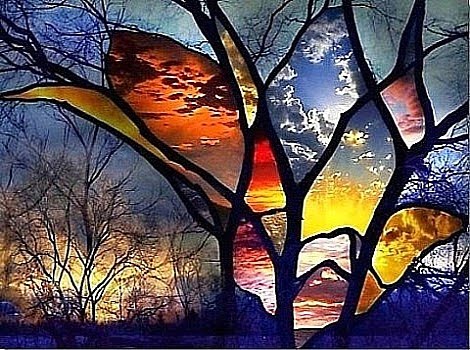
Winter Hues in Stained Glass

Winter Hues in Stained Glass
As the nights grow longer and the days grow shorter, the cold begins to tighten its grip.

The Fair Ophelia

The Fair Ophelia
Ophelia, thou fairest of maidens, what beholdest thou in thy reflection?

Autumn colours - As cores de Outono

Autumn colours - As cores de Outono
Trees in their multicoloured autumnal apparel, a kaleidescope of hues and shades.

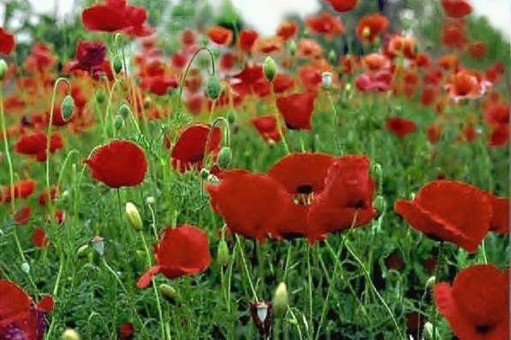
Poppy Field

Poppy Field
"When You Go Home, Tell Them Of Us and Say, For Their Tomorrow, We Gave Our Today"