Showing posts with label environment. Show all posts

Saturday, June 9, 2012

“Give me a child until he is seven..."


“Give me a child until he is seven and I will give you the man.”

This Jesuit motto is the mantra of a television series in thee UK that has filmed a group of individuals every seven years from the age of seven in 1964 till the present day at the age of 56 and it looks likely to continue, which means that we will eventually face the prospect of the participants dying off one by one as they go into old age, including the producer, Michael Apted, and that’s when questions may well be asked as to whether it ought to go on. Whatever happens then, I do hope it will go on a bit further and accompany the chosen subjects well into their sixties. And if any pass away in the process, I suppose we could be there at their funeral, or at least speak with their friends and family about their lives. Having said that, your humble blogger is no spring chicken and may pop his clogs before any of the series participants do and not witness any of the attrition that will occur one day. This is real life, not a scripted tv drama.

For me it has been a fascinating and revealing series so far, witnessing every seven years both the visible physical changes in the subjects and the no-less obvious and natural changes in their mental development, but also, and just as fascinating, the changes taking place in the world around them. We start from a first black-and-white episode showing a truly suffocating dark and dismal environment and progress in subsequent episodes to a world of greater colour and light and growing optimism. The series develops in a very natural way as we follow the participants through childhood, adolescence, adulthood and on to what may now be termed their later years. Admittedly it is all in the form of brief snapshots, but it is nevertheless a potent window into the growing-up process, evolving society and a rapidly changing world.


Although the programme focused on a specific group of children, it is in a way about each and every one of us. Though the course of our own lives may differ somewhat from that of those individuals, the process is the same and the successive stages are the same and we see ourselves in those children as they pass through the various ages and stages of man. We have many common points with them and we recognise many of their experiences in our own. We witness their joys and sorrows, their successes and failures, their triumphs and defeats. The older we are, the more nostalgic we are about the early years, the years of our childhood, our youth, and the younger we are, the more we are intrigued to see how life is faced at an older age. We look back or we look forward and in both cases their life is a reflection of ours and ours of theirs.

“Give me a child until he is seven and I will give you the man.” But is this really so? It sounds good, has a good mystical ring to it, but if the series demonstrates one thing it is that this is so often not the case after all. Several of the participants have gone on to lead lives that we could not have imagined from seeing them at age seven. Some have had better and some worse lives as adults than we might have imagined. And some have been a real revelation. But all have been a slice of human lives at various stages and moments, divided into 7-year intervals, and I for one have been spurred to think long and hard about life and our journey from the cradle to the grave. We can do nothing about the one or the other, but we may do a great deal about the in-between. And that is what really matters in the end.

So now the seven-year-old children of 1964 are the fifty-six-year-old adults of 2012 and, if we are fortunate enough, we may hope to revisit them in another seven years’ time when they are sixty-three. By definition it is a process that cannot go on forever and it is already nearer to its end than its beginning, given the average human age-span, but so far it has been an intriguing and moving journey and for the moment it continues. I personally have learnt a lot from it in ways which are more to do with attitude, perception, approach and acceptance than any concrete practical skill or aptitude or technique. Being older than them by a few years, I have seen myself in them and recognised the grey grim world they were born into.

Seven Up has, as I've said, taken us through a large part of the cycle of life in seven-year leaps and by so doing it has set before us the reality or realities of life and an ever-changing world. It has shown us the hopes, dreams and aspirations of a representative group of individuals, and the many things that life throws at us all along the way. There is joy and sorrow there, happiness and sadness, triumph and tragedy, goodness and badness, and we can all identify with that and recognise ourselves in them and the scheme of things. If I am still around to see the next episode in 2019, I will do so… if only to say: "Their journey through life has reflected my own and the challenges they have encountered along the way have also been my own." The differences are only really in the detail.

“Give me a child until he is seven and I will give you the man.”  I’m not so sure about this, but whatever the truth of it, the contrast between us as children and us as adults, as poignantly witnessed in the Seven-Up series, is such a huge one that it is difficult to believe that we are the same individuals. And therein lies the fascination in the series. We see the child become the man, mentally and physically, and we are transfixed by the transformation. We note with astonishment the power of the years to transform us into something wholly different from what we were when we came into the world. The inexorable passage from cradle to grave - a journey that we all must make, in a life that may be short or long, happy or sad - is a truly gripping experience and must be the core reason why this documentary series has been so successful. It is I suppose a concrete witnessing of the flame of life that eventually and ineluctably weakens, falters and goes out and we thus pass into history. Sic transit gloria vitae.

Tuesday, October 19, 2010

Why do they do it?

A little while ago, while jogging through my neighbourhood park, I noticed that several of newly planted saplings, measuring around 8-9 ft in height, were now just broken stumps poking out of the ground! When I got near I saw that each sapling had clearly been snapped off about 8-10 in. from the ground, leaving a thin splintered stem, and the rest of the sapling, probably more than 95% of it, was nowhere to be seen. In one case the vestigial stem or thin trunk was practically level with the soil!

It was more than clear to me that this was the handiwork of vandals, and this was confirmed by the park-keeper on a later occasion who said that the saplings had been planted by a charitable group of nature lovers at their own expense. Worse still was the fact, as he told me, that the broken-off part of the saplings had been cast into the sandpit of the nearby children's playground! Just to rub the point in and add insult to injury, as it were. He also informed me that the stem which was flush with the ground had been broken a second time to make sure it would not re-sprout, as it had started to produce new shoots.

Quite honestly, readers, I’m at a loss for words (but not quite!) at the wanton destruction represented by such an act which, I recognise, is by no means a rare event in today's society. What possible benefit to the perpetrators, probably teenage youths, could such an act of mutilation be? One can at least understand the motive behind such acts as theft, burglary and fraud, unpleasant and reprehensible as they are – we can all understand the money motive behind these – but to commit gross acts of damage to the environment for no discernible gain is just beyond me. And it is all the more worrying because it has a sinister psychological undertone to it.

I say it is “beyond me” but of course one is forced to conclude that the sheer act of destroying public amenities and environmental improvements must bring pleasure to the warped minds of individuals whose mission in life seems to be to undo the efforts of those who strive to improve and embellish our surroundings. Given the nature of the act, it is very likely to be youths, as this seems to be the speciality of young people who have gone astray and have nothing better to do than damage and destroy property and amenities.

All this of course begs the question of what family background these young miscreants come from which makes it okay in their minds to commit such acts of blatant vandalism. One wonders what kind of parents they have, what sort of family life they experience, and what values are inculcated into them at home. The sad fact is that more often than not the children are a reflection of their parents and that the latter are wholly or partly to blame for such anti-social behaviour on the part of their offspring.

Often destructive children are brought up in a household where the parents swear a lot, smoke heavily, drink alcohol in excess, and use physical violence against their partner and kids. Such parents tend to be poorly educated (if at all), constantly in and out of work (more out than in), and badly behaved themselves. So they set their children the worst of examples by their own aberrant and undisciplined conduct. The children naturally take their cue from those closest to them, from those that bring them up and figure large in their life, and then they in turn export such anti-social behaviour into the wider world around them.

Instead of such kids going into a park to play in the nromal way and generally use and enjoy the amenities and the landscape afforded them, their idea of fun is to ruin things for others by wreaking damage and destruction on the environment. They are never so happy as when they are indulging in anti-social behaviour and making life less pleasant for others. They are the ones who will break what can be broken, steal what can be stolen, deface what can be defaced, and generally get up to as much mischief as they can for the hell of it.

This kind of anti-social conduct says a lot about any society. It says that schools have failed their pupils, that parents have failed their children, and that society in general is failing to properly educate, instruct and guide its young people and to instil morals in them which would set them on the right path to being good and considerate citizens. Somewhere along the line, society as a whole is failing and many youngsters grow up without a set of moral guidelines that would prompt them to do good rather than bad. And of course a proportion of them grow up to commit more serious offences and even become hardened criminals.

This is what they
should look like
Well, there you have it. It's all very sad, and though we must be optimistic (I suppose), it rather seems that vandalism, hooliganism and anti-social behaviour in one form or another are here to stay, being the by-products of a society that promotes selfishness, self-interest and opportunism, among other things, and praises materialism to the skies. To create a society of good, honest, caring and considerate citizens, very differen ideals and goals need to be fostered and encouraged. And I'm not talking about creating 'perfect' citizens, simply 'good' citizens, because none of us is or can ever be perfect. Is this an impossible aspiration? It's getting to look like it.

Sunday, August 22, 2010

Stop the World! I want to get off...

Do you ever feel, like me, a sense of growing despair at the state of our world in this the 21st century? The sentiment expressed in the somewhat humorous title of this post is meant to convey this sense of ‘fed-upness’ with the present state of the world that we humans have forged. We have somehow created a world seething with conflict, war and strife on all sides? If only the world were like a fairground carousel from which we could jump off at any time! I myself grew up in a time when we were made to believe that, having emerged from a massively destructive global conflict and the dark days that followed it, society and the world in general were gradually becoming a better place by the day in every way and that it would continue to get better until we attained some sort of earthly utopia or Nirvana. We were not, of course, given a time-frame for this, but there seemed little doubt that it would come to pass one day.


But that’s not happening, is it? Not even remotely. There’s precious little peace or harmony in the world today and danger seems to lurk round every corner. All over the planet earth, one country or people is dumping on another country or people. One nation or cultural community is clashing with another. The apparent cause may be territorial, political, economic or religious. It hardly matters. An excuse or pretext for aggression or hostilities towards one’s fellow men can always be found. And once found, the business of making war or launching homicidal attacks can begin in the name of Jesus, God, Allah, or some other suitable deity, holy figure or to-die-for cause, with a clear conscience.


If it's a war waged by Muslims against the Infidel (nowadays that's us in the West), it will inevitably be a holy war or crusade, in the name of Allah and all Islam. It would seem that Allah, the All Merciful, is quite happy to see women, children and innocent people in general being slaughtered in His name by such devotees as suicide bombers, providing it’s proclaimed a holy war. So that's alright then. So much more reassuring to know that one might receive a holy bullet in the head or be blown up by a holy bomb than by one of your common-or-garden bullets or bombs. The reality, of course, is that there's nothing holy about any war, whether it's waged by Muslims, Christians or the followers of any other religion, and one could not imagine either the God of Abraham or the God of Mohammed sanctioning such carnage in His name. War is wrong whoever practises it, its outcome consumes many lives and causes untold misery and visits the participants with destruction and devastation.


If it’s not human beings butchering each other in the name of their god or other ideal, it’s a natural disaster: it’s a flood that sweeps away people and their homes, a tsunami that swamps the land and bulldozes everything in its path, an earthquake that demolishes villages and towns, a volcano that disgorges molten lava and spews out hot ash engulfing whole communities, a hurricane or cyclone, or some such phenomenon, that tears its way across the landscape carrying all before it, torrential rains that transform huge swathes of land into lakes, months of drought that parch the ground and turn it into a dust-bowl, and so on and so forth.


And of course we mustn’t forget the threat posed by contagion when it becomes an epidemic and then spreads across national borders to develop into a full-blown pandemic, killing thousands of people as it extends its reach. Suddenly there’s an outbreak of some life-threatening infection in one country and within days or weeks it’s spreading from country to country, sowing fear and panic in its path round the globe. Before you know it, it’s arrived on your doorstep and emergency action is being taken by the local authorities to check it and to immunise the population against it. Usually too little and too late.


You would think that with so many natural disasters and calamities occurring throughout the world, that would be more than enough for us. But you’d be wrong. We feel compelled to add to the sum-total of our miseries and misfortunes by serving a dose of our own man-made woes just to be sure there’s enough sorrow and grief in the world to go round. So, those few pockets on our planet which have relatively few natural calamities often have local nationalist movements busy planting bombs in public places designed to kill en masse and indiscriminately. A sense of injustice or desire for regional autonomy or even independence seems to excuse nowadays any act of mass murder of innocent people, as they go about their day-to-day business, to make its point.


We often brand someone an ‘animal’ to indicate that their behaviour is unworthy of a human being or we might say that a riotous mob behaved like animals to signify that they ran riot or behaved in a savage manner. And yet this is the last thing that animals actually do. Animals very seldom kill for sport, but for food. Humans kill for sport and out of sheer spite and revenge. Animals rarely go on a rampage of destruction. The history of humans is full of countless acts of looting and rioting. Animals are not known to indulge in serial or mass killings, humans do it with alarming frequency. Need I go on? In fact, when we want to describe wanton and unacceptable conduct of any kind we should say that we’re behaving like humans! Because we are the savages, not animals. We are the species that kills and slaughters and pollutes and destroys on a large and systematic scale and are a threat to ALL other species of life on this planet and to our very environment. Animals live in harmony with their environment, whereas we are antagonistic to it and are constantly harming it.


We humans have made a very complex place of the world. Unless you are prepared to take yourself off to some exceedingly remote and hostile location and live in a cave or hut, cut off from society, you cannot escape this all-pervasive complexity. Today human society is more complex than ever before. Our technology and our scientific inventions, which are meant to assist and support us, add to this complexity as they become ever more sophisticated. It is difficult to really keep up with anything these days. Innovation and invention means that no sooner have we familiarised ourselves with one weird and wonderful device or gadget, than a new one comes along to replace it. Not because it has outlived its use or is outdated, but simply because the policy of ‘planned obsolescence’ dictates that products must be constantly renewed and given a face-lift to keep the relentless wheels of capitalist enterprise turning.


We are a wasteful, voracious, destructive and lethal breed and bad news for the environment and all other animals on this planet, and we consume vast quantities of the Earth’s resources to sustain our ever-growing numbers and maintain our prodigal way of life. When God went one step further than the apes to create humans, was it possible that he did not know what He was unleashing on the planet? How could this be, given that God is prescient and omniscient? Could it be that he knew and did it anyway? Perhaps He foresaw that without man the earth would be a very boring place, with no bloody wars, savage conflicts, genocidal massacres or social unrest, just peace and harmony all around. It seems that even God needs a bit of excitement in his celestial existence and so He created mankind, and I’m sure we’ve never disappointed him since!

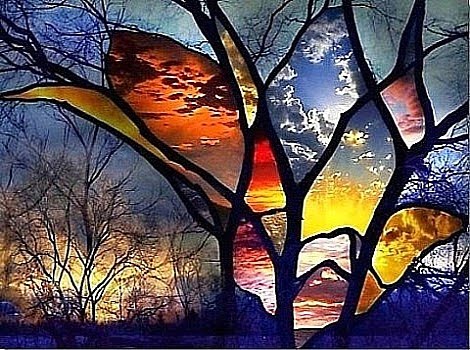
Winter Hues in Stained Glass

Winter Hues in Stained Glass
As the nights grow longer and the days grow shorter, the cold begins to tighten its grip.

The Fair Ophelia

The Fair Ophelia
Ophelia, thou fairest of maidens, what beholdest thou in thy reflection?

Autumn colours - As cores de Outono

Autumn colours - As cores de Outono
Trees in their multicoloured autumnal apparel, a kaleidescope of hues and shades.

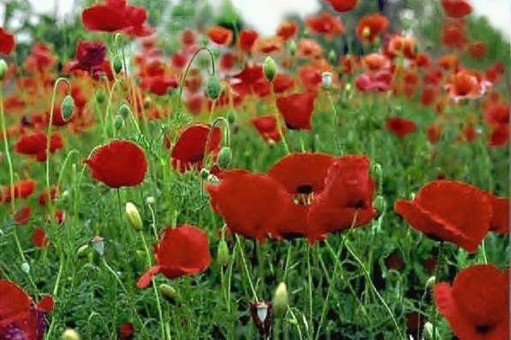
Poppy Field

Poppy Field
"When You Go Home, Tell Them Of Us and Say, For Their Tomorrow, We Gave Our Today"